Call Us Now
 Schedule a Consultation

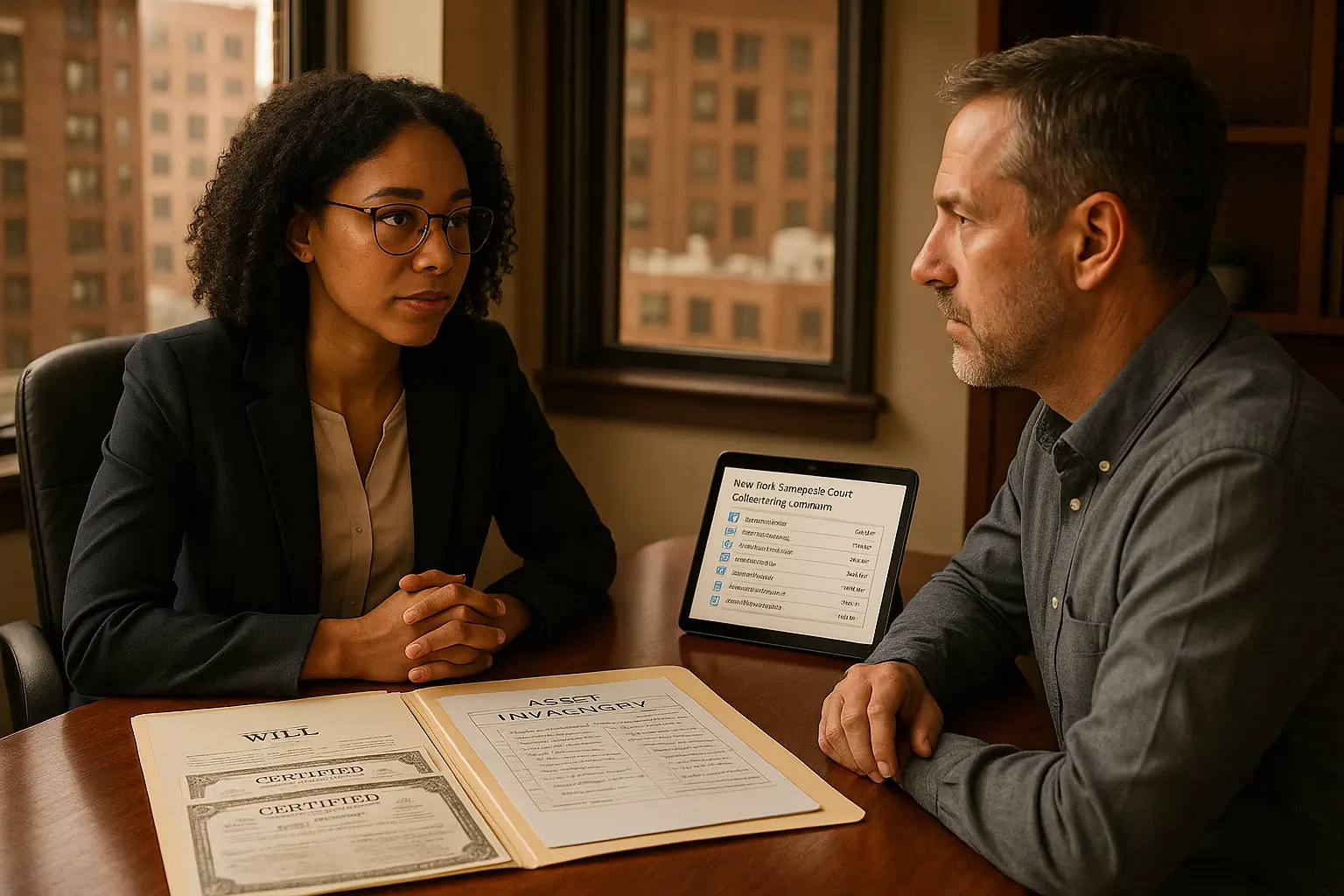
Manhattan’s Surrogate’s Court is challenging not due to mystery but because it requires precision. Filing the wrong petition type or submitting an incomplete packet can freeze your family’s assets for weeks or months, complicating estate administration significantly.
Before completing any forms, confirm whether you have the original will, if there is any real estate solely owned by the deceased, and which assets must pass through the estate versus those that transfer directly to beneficiaries. Use the WARDS checklist and six practical steps below to create a plan that avoids unnecessary delays.
Three Facts That Determine Your Filing Path
Families lose time, money, and energy over entirely preventable missteps in Surrogate’s Court. Here’s what to know before you start any estate proceedings.
Your path isn’t a preference—it’s determined by facts. If you have the original will and the named executor is able to serve, you’re headed toward probate and will receive Letters Testamentary. No will? Missing original? Invalid document? No available executor? You’re looking at administration instead, where the court appoints someone based on statutory priority rules under SCPA § 1001, and you’ll receive Letters of Administration.
Most “small estate” confusion is actually a title problem. Voluntary Administration—the streamlined option—generally works when there’s $50,000 or less in qualifying personal property and no real estate in the decedent’s sole name. Where families go wrong: counting assets that pass outside the estate (like joint accounts or retirement funds with named beneficiaries) or missing a deed detail that requires a full court proceeding.
Preparation matters in Manhattan. The Court and financial institutions insist on the right authority and the right paperwork. Walk in with a clean asset list, accurate family information, and the correct original documents, and your case moves forward. File first and verify later, and you could face a rejection that takes weeks to sort out.
If there’s one thing to take from this guide: pause long enough to confirm the will situation, confirm how property is titled, and confirm which assets actually belong to the estate. Then pick your lane and build your filing around it.
Figuring Out Which Filing Path Fits Your Situation
Surrogate’s Court runs on process. What you file, who has priority to file, and what documents you’ll need all depend on facts you can nail down early. Start with four questions: Is there an original will (not a copy)? What assets exist, and how are they titled? Is there any real estate? And what’s the total value of probate estate assets—meaning those that don’t automatically pass to a co-owner or named beneficiary?
Expert Insight
One thing I notice time and again is that people are surprised by how much detail the Surrogate’s Court demands when it comes to probate in Manhattan. The entire process pivots on getting facts and paperwork right the first time; even small missteps—like misreading which assets actually require probate—can set families back weeks or months. It’s easy to underestimate how procedural and precise the Court is, especially for those dealing with the emotional weight of a recent loss.
What I’ve learned at NY Wills & Estates is that successful navigation of New York County Surrogate’s Court isn’t about just filling out forms, it’s about understanding the Court’s priorities. If you approach it with thorough preparation and verify every piece of information up front, the process is much smoother and you’re less likely to encounter those frustrating delays. It really comes down to clarity, accuracy, and patience—qualities that, though simple, make all the difference for families going through probate in Manhattan.
·
NY Wills & Estates Team
When any of these facts remain murky—especially whether you have the original will, whether real estate is solely owned, or whether you truly qualify for small-estate treatment—verify before filing. A quick call to the Court’s information line or a brief consultation with an attorney can prevent a rejected petition and weeks of avoidable delay.
One Manhattan-specific wrinkle worth noting: when assets, heirs, or property cross state lines—say, the decedent lived in New Jersey but owned a Manhattan co-op—you may need to navigate multiple jurisdictions. Catching multi-state issues early prevents the frustration of filing the right papers in the wrong court.
Why Getting This Right the First Time Matters
When the wrong type of proceeding gets filed or a packet arrives incomplete, the consequences aren’t minor. You may need to redo forms, re-serve family members, provide additional affidavits, pay extra fees, and wait longer for review—especially in a high-volume court like New York County Surrogate’s Court.
The real-world impact shows up fast. Property sales stall because you can’t deliver the letters a buyer or title company needs. Funds sit frozen while mortgage payments and maintenance fees keep coming due. Banks flatly refuse to act without the exact Surrogate’s Court authority you lack. Your chosen path also affects timing around insurance matters, co-op board requirements, and creditor deadlines.
Consider pausing for a verification call or legal consultation when you only have a copy of the will, there’s real estate with unclear title, one or more heirs are hard to locate or likely uncooperative, a co-op is involved (board requirements often drive the whole timeline), or you’re hovering near the $50,000 small-estate threshold and aren’t sure what counts.
The WARDS Checklist: A Simple Framework for Your Decision
Use WARDS—Will, Assets, Real estate, Disputes, and Status—as a practical filter. These five factors reveal whether your next step is probate, administration, or a small-estate filing, and how realistic it is to handle things yourself.
W: Will and Executor
With the original will in hand and a named executor who’s able and willing to serve, you’re generally headed toward probate. No will, no locatable original, or no executor who can step up? The Court will typically appoint an administrator instead.
Having only a copy of the will creates a serious fork in the road. New York courts generally require the original, and when it can’t be located, you’ll need additional affidavits and proof. Many families in this situation end up going through administration unless an attorney finds a viable path to probate a lost will. If you do have the original, protect it: avoid bending, stapling, or writing on it, and keep it secure while using copies for reference.
Looking ahead—if you’re still in the planning stage for your own family, this is exactly where proper estate planning pays off. A well-prepared and safely stored will—and, where appropriate, trust planning—can prevent Surrogate’s Court headaches down the road. See: Wills & Estate Planning.
A: Assets and Small-Estate Eligibility
Voluntary Administration is designed for smaller, simpler estates: qualifying personal property of $50,000 or less and no real estate in the decedent’s sole name. (This threshold is current as of this writing but should be verified with official court resources before filing.)
The trap families fall into most often? Counting the wrong assets. Jointly held accounts with survivorship rights, life insurance payable to named beneficiaries, and retirement accounts with designated beneficiaries typically pass directly to those beneficiaries without going through probate and don’t count toward the threshold. If your total hovers close to $50,000, build in a safety buffer—small misclassifications or market fluctuations can push you into a full proceeding. For detailed eligibility guidance, see the small-estate section below.
R: Real Estate and Titled Property
When the deceased person owned New York real property in their sole name, you generally cannot use the small-estate process—you’ll need probate (with a will) or administration (without one).
Pay close attention to titled property and special transfer rules. Co-op transfers are document-heavy and timing-sensitive even when there’s a valid will. Vehicles may allow certain DMV transfers depending on value and documentation. Out-of-state property may require an additional ancillary proceeding where that property is located.
D: Disputes and Complexity
Some estates are paperwork-heavy even when no one intends to be difficult. Legal guidance makes particular sense when you’re facing potential will challenges (concerns about undue influence, capacity, or suspicious late changes); uncooperative relatives who won’t sign waivers; missing or hard-to-locate heirs (including those with international addresses); business interests, ongoing lawsuits, or complicated debts; trust involvement with unclear funding or overlap with the estate; or tax questions. New York’s estate tax exemption is approximately $6.94 million for 2024 (verify current figures before filing, as this amount adjusts periodically), but income tax and final-year filing issues can arise well below that threshold.
S: Status of Your Documents
Many delays stem from fixable gaps: misspelled names, missing heir addresses, incomplete family information, omitted notices, or outdated forms. Before submitting anything, confirm you have enough certified death certificates for every institution you’ll contact, the original will (for probate), a clean family tree with correct legal names and addresses, current forms from official sources, and accurate court contact information.
Six Steps to Build a Clean, Court-Ready Filing
These high-impact steps reduce delays and make it easier to get help—whether from the Court, a bank, or an attorney.
1. Locate and Protect the Original Will
Find the original will and protect it. When you discover it in a drawer, safe, or file cabinet, document when and where it was found and who took possession—this chain-of-custody record matters if authenticity is ever questioned. Use clearly labeled copies for everyday reference, avoid altering the original in any way, and don’t attempt DIY notarization. If the will changes locations, log the transfer with the date, person, and reason.
2. Order Certified Death Certificates Early
Many institutions require certified copies, and delays here can stall everything else. Order more than you think you need—the right number depends on how many banks, insurers, and benefit providers you’ll contact. Ask the issuing office about processing times, fees, and expedited options. Record the order date, quantity, and expected delivery so you can plan your outreach.
3. Create a Clear Asset Inventory
A thorough asset list helps you determine small-estate eligibility and shows the Court or an attorney exactly what authority you’ll need. For each account, note the institution, account type, approximate balance, how it’s titled, whether there’s a beneficiary designation, and any account identifiers.
| Institution | Asset | Approx. Value | How Titled | Beneficiary? | Notes |
|---|---|---|---|---|---|
| Chase | Checking | $22,500 | Sole | No | Likely estate asset |
| Merrill | IRA | $41,200 | Retirement | Niece | Passes outside estate |
| — | Co-op | $1,100,000 | Confirm deed/stock | N/A | Verify ownership type |
Prioritize any account tied to ongoing income (rent deposits, pension, Social Security) or urgent expenses (maintenance, mortgage).
4. Verify Real Estate and Out-of-State Property
Real estate often changes the filing path entirely. Search for deeds, closing statements, property tax bills, co-op stock certificates, and proprietary leases. When needed, check public property records to confirm ownership and how title is held. Out-of-state property may require ancillary probate in another jurisdiction, so set expectations early. If a vehicle transfer matters, locate the title and registration and verify current DMV requirements.
5. Confirm Small-Estate Limits
WORTH KNOWING
New York’s Voluntary Administration threshold is commonly cited as $50,000 in qualifying personal property, but you should confirm current rules using official resources at nycourts.gov. When seeking guidance, be sure to record the date, department, and the information provided.
If your estate value is near the threshold, avoid forcing a small-estate filing; the risk of rejection and subsequent delays is not worth it.
6. Identify Potential Disputes and Consider Legal Help
Think of legal help as risk management. Many families handle uncomplicated small estates on their own without issue. But when red flags appear—missing original will, real estate, conflict, hard-to-find heirs, business interests, trust overlap, or time pressure—early legal strategy often saves money by preventing rejected filings and avoidable litigation.
To make any consultation efficient, prepare a one-page summary: who died, date of death, whether there’s an original will, list of heirs and beneficiaries, rough asset list, and a “problems” list (missing documents, disputes, unclear titles).
The Court’s Online Guidance Tool Can Help
The New York State Unified Court System offers guided online tools that help identify whether you need probate, administration, or small-estate treatment. While no substitute for legal advice, these tools help prevent basic “wrong path” mistakes and flag information gaps—like unclear asset titling or incomplete family details—that you should resolve before submitting papers.
The tool asks whether there’s an original will, gathers basic family and heir information, checks for real estate, and estimates personal property value. Based on your answers, it points you toward the likely filing type and matching forms. It’s accessible on desktop and mobile, which helps when family members are coordinating from different locations.
Start here: NY Courts CourtHelp: Decedent Estates.
How the Three Filing Paths Compare
Here’s a summary of probate, administration, and small-estate filings—including what you gain from each and what to expect next.
| Process | Who Files | When to Use | What You Get |
|---|---|---|---|
| Probate | Executor named in valid will | Original will exists; executor eligible and willing | Letters Testamentary—legal authority to act for estate |
| Administration | Eligible next of kin by statutory priority | No will, invalid will, or no executor can serve | Letters of Administration—authority to manage and distribute under NY law |
| Voluntary Administration | Eligible distributee (typically close relative) | Personal property ≤ $50,000; no solely owned real estate | Limited authority to collect and distribute qualifying property |
All three paths share the same goal: getting court-issued authority that banks, title companies, and other institutions will recognize. What varies is the complexity, required notices and consents, and scope of property you can transfer.
A specialized probate and estates practice can help ensure your petition matches your facts—especially around asset titling, real estate, and kinship. Learn more: Probate & Estate Administration.
What Happens After You Receive Court Authority
Once letters or small-estate authority are issued, the representative uses them to collect estate assets, address valid claims, handle property transfers or sales, and distribute to heirs and beneficiaries. Keep clean records from day one—payments, reimbursements, communications—because later accounting steps become much easier when everything is documented.
Small-Estate Rules: What Actually Qualifies
Small-estate filings are attractive because they’re simpler, but eligibility is strict. Most mistakes come from miscounting assets or overlooking property title issues.
| Factor | How It Works | Common Mistake |
|---|---|---|
| Threshold | $50,000 in qualifying personal property; verify current limits with official court sources | Relying on outdated figures or informal advice |
| Real Estate | Solely owned real estate generally disqualifies you | Starting a small-estate case when a deed or co-op is in decedent’s sole name |
| Non-Estate Assets | Joint accounts and beneficiary-designated assets pass outside the estate | Counting these toward the threshold |
| Verification | Titles, beneficiary forms, and statements determine what counts | Filing without gathering proof of title or beneficiary status |
Uncertain whether you qualify? Treat that uncertainty as a sign to verify before filing.
Manhattan Surrogate’s Court: Where to Go and Who to Call
New York County Surrogate’s Court is located at 31 Chambers Street, New York, NY 10007. For current hours, department numbers, and efiling updates, visit nycourts.gov. The main line is typically 646-386-5000, with the Probate Department often listed at 646-386-5004—but always confirm current contact information before relying on these numbers.
A helpful habit: keep a dated call log noting the department, person or extension reached, and what you were told. When you’re juggling multiple institutions and deadlines, that simple log becomes surprisingly valuable.
Note that each borough in New York City has its own Surrogate’s Court. If the decedent resided in Brooklyn (Kings County), Queens (Queens County), the Bronx (Bronx County), or Staten Island (Richmond County), you’ll file in that county’s court instead. The New York State court system’s web page at nycourts.gov can help you locate the correct courthouse and contact information for any county.
Which Department Handles Your Matter
| Matter Type | Department | What to Have Ready |
|---|---|---|
| Probate (with will) | Probate Department | Original will, death certificate info, heir details, basic asset summary |
| Administration (no will) | Administration Department | Death certificate info, family/kinship details, asset summary |
| Small Estates | Small Estates Office | Asset tally showing ≤$50,000 in qualifying property, confirmation of no solely owned real estate |
| Guardianship | Specialized Units | Medical and supporting documents; call before filing anything urgent |
| Adoption | Specialized Units | Follow posted intake instructions; confirm current requirements |
The First 48 Hours After Someone Dies: What to Do
The first two days are about protecting property, preventing fraud, stabilizing urgent bills, and organizing information—without overstepping what you can’t legally do yet. When possible, divide responsibilities: one person handles documents, one handles institutional calls, one handles property logistics like keys, mail, and insurance.
Secure Finances and Notify Key Contacts
Secure the residence and valuables—photograph high-value items and keep a basic inventory. Identify time-sensitive bills: mortgage, maintenance, utilities, insurance premiums at risk of lapse. When contacting institutions, ask what they require after a death and what they can do before letters are issued.
Here’s a simple script: “I’m calling to report a death and understand what documents you’ll require. I’m not requesting withdrawals—I’m trying to learn the process and what you’ll need once Surrogate’s Court issues authority.”
Organize Essential Documents
Create a master estate file—one physical folder plus a secure digital backup. Scan key documents using consistent naming (example: “2024-06-12_Death-Certificate_Certified.pdf”). Keep a dated index listing what originals exist and where they’re stored: will, deeds, co-op papers, titles. Track all contacts with dates and outcomes. Don’t forget to check for a safe deposit box—banks have specific post-death access procedures, and important documents like wills or deeds are sometimes stored there.
Avoid Common Filing Mistakes
The errors that most often cause delays: inconsistent names across forms (watch middle initials, suffixes, and spelling), missing or incomplete addresses for heirs, outdated form versions or omitted attachments, and incorrect fees or unaccepted payment methods. Use a simple process—fill, review, sign, final review—and have a second person check for consistency before you submit.
Finding Official Court Forms
Use nycourts.gov as your starting point for official Surrogate’s Court forms and instructions. Avoid paid form websites—court documents can change, and using the wrong version is a common cause of delays.
When downloading forms, look for any “last updated” or revision markers and read instructions before filling anything out. Most petitions require supporting documents: family information, waivers and consents, addresses for service, and proof related to the will or assets. Download only what matches your likely path, then build a checklist of required attachments.
Filing Methods, Fees, and Technical Tips
Some Surrogate’s Court matters can be efiled through NYSCEF. However, original wills generally must be submitted physically, and small-estate procedures may have their own rules. Confirm requirements before assuming an online-only approach will work.
For efiling, watch for file size limits, unclear scans, and incorrectly labeled uploads. Use clear PDFs and consistent naming. For in-person filing, keep a complete copy of your packet for your records.
What You’ll Pay
Filing fees typically depend on estate value, not a flat amount. Small-estate filings generally have minimal fees. Because fee schedules and payment methods change, confirm current requirements through official court resources or the clerk before submitting.
When you’ll need certified copies of court-issued documents for banks or brokers, ask early about the process and timing. If paying fees is a hardship, inquire about fee-waiver options (“poor person” relief) before you submit payment—courts generally won’t refund fees after the fact.
Understanding How Long Probate Takes
Even uncontested matters in New York County take time due to review queues and technical corrections. Disputes, missing heirs, incomplete family information, or will problems can extend timelines significantly.
Think in milestones rather than exact dates: intake and initial review of your submission, requests to correct or supplement paperwork (common even in straightforward cases), issuance of authority (letters or small-estate authorization), and post-appointment work (collecting assets, handling property, paying obligations, distributing).
What you can control is completeness: clean names and addresses, consistent documents, correct attachments, clear asset summary. When there’s a genuine emergency—a time-sensitive sale or pressing need to protect assets—an estates attorney can advise whether options like preliminary or temporary authority might apply.
To check status, keep it simple: “I’m following up on our filing submitted on [date]. Can you confirm whether it’s in review, whether anything is missing, and what the next expected step is?”
When Hiring an Estate Attorney Makes Sense
Many families successfully handle straightforward small estates on their own. Legal guidance becomes a smart investment when the estate involves real estate, a missing or questionable will, difficult family dynamics, multi-state issues, or complex assets.
Specifically, consider speaking with an attorney when the original will can’t be found or someone may contest it, real estate or a co-op is involved (co-op boards have strict transfer requirements), heirs are unknown, hard to locate, or uncooperative, there are business interests, trusts, substantial debts, or tax concerns, or people or property span New York and New Jersey. Firms like NY Wills & Estates, licensed in both states, can simplify coordination when estates cross the Hudson.
What about cost? Fees vary widely based on complexity, geographic area, and whether the matter is contested. Some attorneys offer flat fees for simpler filings; contested or complex matters are typically billed hourly. Fee structures and amounts differ significantly among practitioners, so always request a written engagement letter with clear scope before proceeding.
Questions Worth Asking Your Attorney
Before hiring, clarify three things: What work will you handle versus what falls to me? What fee structure fits my case—flat fee, hourly, retainer—and what triggers additional charges? And what are the likely bottlenecks in my situation (missing heirs, unclear titles, co-op pressure, will issues)?
DIY vs. Professional Help: Weighing the Trade-Offs
Most families face the same question: “Should we do this ourselves, or hire help?” A good decision balances court costs, the value of your time, and the risk of delay.
The main cost buckets: court filing fees (tied to estate value), certified copies (death certificates and sometimes court documents), out-of-pocket administration costs (mailing, copies, appraisals when needed), and attorney fees.
DIY is often realistic when the estate is a true small estate, there’s no real estate, no conflict, and you can gather complete information. A brief consultation is worthwhile when you’re unsure about threshold eligibility, close to the cutoff, or want confirmation you’re using the right process. Full representation often pays for itself when there’s real estate, a missing will, hard-to-find heirs, disputes, or multi-state complications—a rejected or stalled filing can cost more than doing it right the first time.
Handling Common Complications
What to Do If the Will Is Missing
When the original will can’t be found, take a structured approach. Search common storage places—home files, safe, firebox, desk drawers. Contact the drafting attorney (if known) and ask whether they retained originals. Check safe deposit box access rules, as banks have specific post-death procedures. Ask close family members who may have been entrusted with documents. Document every step with date, person contacted, and outcome—this record matters if the issue becomes contested.
If a beneficiary claims a will exists but no one can produce the original, or you anticipate conflict, get legal advice before choosing a filing path.
Managing Long Delays
While waiting, you can still reduce risk. Preserve assets by maintaining insurance and securing property. Keep stakeholders updated with short, factual status notes (avoid promises about distribution). Track estate-related expenses you pay personally with receipts and a simple ledger. When there’s a true emergency, ask counsel about urgent options.
How One Family Got It Right
A family came in certain they needed full probate. After a quick factual review, the picture cleared: the decedent had one modest checking account in their sole name, retirement funds with named beneficiaries, and no solely owned real estate (the apartment wasn’t in the decedent’s name alone). They also had complete heir information and no disputes brewing.
With those clean facts, the filing shifted to the small-estate process. Because the family had already organized death certificates, created a precise asset list distinguishing estate from non-estate assets, and kept documents in a single indexed packet, the submission went smoothly and required fewer follow-ups. Most importantly, they avoided the frustration of filing in the wrong lane and having to start over.
Preparing for Your Consultation
Planning to consult a New York wills and estates attorney? You’ll get better answers—and often lower fees—by arriving organized. A short consultation typically confirms the correct court path, identifies missing information, discusses likely timing bottlenecks, and provides a clear fee structure based on your facts.
What to Bring
Gather the original will (and any copies), certified death certificates, your asset list showing how each asset is titled and any beneficiary designations, real estate and co-op documents, vehicle titles, information on liens, contact information for relevant institutions, any written communications from banks or insurers, and any Surrogate’s Court paperwork already filed or received.
What Happens at a Consultation
A well-run consultation ends with a prioritized action list: which proceeding fits (probate, administration, or small estate), what documents are missing, what the likely bottlenecks are, what you can do immediately, and next steps if you decide to move forward with representation.
Thinking longer-term about how to make things easier for your own family? This is where trust planning may fit—not for everyone, but for households that want to streamline administration, provide structure for beneficiaries, and reduce the odds that loved ones must navigate Surrogate’s Court for every asset. See: Trust Planning.
How NY Wills & Estates Can Help
Families reach out at different moments, and the best solution depends on your facts, timeline, and stress level.
Need authority quickly to deal with Manhattan accounts or property? We can help confirm the correct path, assemble a clean petition, and reduce common Surrogate’s Court delays.
Estate seems simple and you want confirmation before filing? A targeted consultation can verify small-estate eligibility—especially the $50,000 threshold and whether any real estate disqualifies you.
Seeing red flags—missing original will, conflict, hard-to-find heirs, co-op transfer pressure, or tax issues? Early strategy often saves money by preventing stalled cases or avoidable litigation.
Situation touches both NY and NJ? Our dual-state licensing simplifies coordination when people, property, or administration tasks span the metro area.
Schedule a Consultation
Call NY Wills & Estates at 516-518-8586 to discuss your family’s next step. A consultation can help you confirm whether to file probate, administration, or a small-estate proceeding, identify missing documents before they cause delays, understand realistic timing in Manhattan Surrogate’s Court, and get a clear fee structure and scope of work for your specific situation.
Frequently Asked Questions
-
What cases does Surrogate’s Court handle?
Surrogate’s Court handles probate (with a will), administration (without a will), small estates (Voluntary Administration), and estate-related disputes. As a specialized trial court within the State of New York court system, it also has jurisdiction over certain guardianship and adoption proceedings.
-
What’s the difference between probate and administration?
Probate proves a will and appoints the executor named in it. Administration applies when there’s no will (or no valid executor) and the Court appoints an administrator based on statutory priority under SCPA § 1001.
-
Who qualifies for Voluntary (Small Estate) Administration?
You generally qualify when there’s no solely owned real estate and qualifying personal property is $50,000 or less. Assets that pass automatically by joint ownership or beneficiary designation typically don’t count toward this threshold. Verify current limits with official court resources before filing.
-
Can I file without a lawyer?
Yes, especially for small, uncontested estates with clean paperwork. When there’s real estate, a missing original will, significant conflict, hard-to-find heirs, or complex assets, legal guidance often prevents costly delays.
-
Where is Manhattan Surrogate’s Court located?
31 Chambers Street, New York, NY 10007. Confirm current hours and department contacts at nycourts.gov.
-
What documents do I need to start?
Typically: certified death certificates, the original will (for probate), heir and distributee information, and an asset summary—plus any deeds, co-op documents, or titles tied to property transfers.
-
When should I consider hiring an attorney?
Consider cost and risk trade-offs: when your case is close to eligibility thresholds, involves property, conflict, missing documents, or multi-state issues, even a brief consultation can prevent rejected filings and long delays.
-
What if the original will is missing?
Document your search thoroughly and consider a legal consultation before filing. Probating a copy is sometimes possible but requires additional proof and court approval. Many families proceed with administration when the original can’t be found.
Disclaimer: This article is for information purposes only and does not constitute legal advice. Probate and estate administration are fact-specific, and court procedures, fees, and thresholds change. Reading this content does not create an attorney-client relationship with the author or any firm. Always confirm requirements, fees, and filing instructions with the Court and/or a licensed New York attorney before taking action.
Attorney Advertising: This web page may constitute attorney advertising under applicable rules. Attorney information is available upon request.
Last content update: June 2024. Because rules and procedures change, verify time-sensitive information with official court sources before filing.
Understanding Manhattan’s Surrogate’s Court is a crucial step—NY Wills & Estates provides clear, personalized estate planning tailored to your family’s unique needs, from wills to complex trusts and Medicaid planning. Schedule a consultation to build a confident, legally sound plan that protects your legacy across New York and New Jersey.
References & Sources
- 1
Benjamin Katz. (2021). The Probate Process is Much Easier for Small Estates. Benjamin Katz, Esq. P.C..
Accessed: 2026-02-16
- 2
Law Offices of Maurice Verrillo, P.C.. (2023). New York Small Estate Administration: How it Works. Law Offices of Maurice Verrillo, P.C..
https://www.verrillolaw.com/blog/new-york-small-estate-administration-how-it-works/
Accessed: 2026-02-16
- 3
David Brinen. (2024). New York & Federal Estate Taxes: Be Aware of the 2026 Cliff. Lacy Katzen LLP.
Accessed: 2026-02-16
- 4
Roman Aminov. (2020). New York Small Estates and Voluntary Administration. Estate Planning NYC & Brooklyn.
https://www.aminovlaw.com/new-york-small-estates-and-voluntary-administration/
Accessed: 2026-02-16
- 5
NY Wills and Estates. (2025). What Is Surrogate’s Court in New York? A Guide for NYC Residents. Law Offices of Vlad Portnoy, P.C..
https://nywillsandestates.com/blog/new-york-surrogates-court-guide/
Accessed: 2026-02-16
Our Editorial Standards
NY Wills & Estates is committed to providing accurate, well-researched legal and estate planning information. Our editorial team reviews all content for accuracy and relies on reputable sources including legal authorities, governmental agencies, academic institutions, peer-reviewed journals, and established healthcare providers. All references are verified for accessibility and relevance at the time of publication.
We strive for accuracy in everything we publish, but we recognize that mistakes can occur and information can become outdated as legal guidelines, statutes, and regulations evolve. If you notice an error or outdated information, please contact us so we can review and update our content.
Important Disclaimer
The information provided on this website is for general informational and educational purposes only. It is not intended as, and should not be interpreted as, professional legal, financial, or tax advice. Always consult with qualified healthcare professionals, licensed practitioners, or appropriate advisors before making decisions about your estate planning, legal, financial, or tax matters. NY Wills & Estates does not assume liability for actions taken based on the information presented on this site.